
The video game industry received a devastating blow with the announcement of BioWare’s closure and the cancellation of the upcoming Mass Effect game, a development that left millions of fans utterly inconsolable, as the studio’s legendary titles have accompanied players for decades. The decision is part of EA’s cost-cutting measures, which, according to Bloomberg, leaves about 400 people out of work across the company, of which nearly 50 are at BioWare.
It is an unexpected closure that buries more than three decades of major successes in role-playing games, since the studio was founded in 1995 in Edmonton, Canada, and that truncates the development of the new Mass Effect entry, which was in an early stage. For players who grew up exploring its worlds, it leaves a huge void and marks the end of an era for video games, amid corporate restructurings and internal issues that had been brewing for some time.
What BioWare Was and the Dark Problems Behind the Studio
To grasp the magnitude of this news for players, it helps to recall that BioWare was a developer specialized in role-playing games with deep narratives, where every player choice could alter the course of the story and forge strong emotional bonds with memorable characters, in sagas such as Baldur’s Gate, Star Wars: Knights of the Old Republic, Mass Effect, and Dragon Age.
However, the studio’s foundations began to tremble when Electronic Arts, its parent company, was recently acquired by a consortium composed of the Public Investment Fund of Saudi Arabia and the financial firms Silver Lake and Affinity Partners, which unleashed a wave of job insecurity. In a letter to employees, EA explained that “saying no to some things we are passionate about allows us to focus our teams and resources.”
Employees themselves saw this outcome coming, to the point that one of them confessed last year, as PC Gamer recalled, that it felt like only a matter of time before the axe would fall, reflecting the climate of instability that permeated the studio.
In response to the painful news, the studio itself bid farewell to its community with a message on social media, originally in English, noting that “what generations of BioWare built together is something to celebrate and remember,” and adding that “these games became so much more because you played them, debated their choices, fell in love with the characters, and made these worlds your own.”
As expected, the community channeled its grief online with messages recalling the impact of BioWare’s works, replying to the studio’s post on X with lines such as “your stories and worlds inspired many, thank you for everything” or “thank you for building one of the best trilogies in video games, we’ve never seen another series like it.” One of the most shared posts came from Shinobi602, a well-known industry account on X, which wrote, originally in English, that “this is a damn gut-punch to the heart. Thanks for being a huge part of my childhood.”
The Shadow of The Veilguard and the Pain of Its Original Creator
When examining the factors that could have influenced this outcome, it is impossible not to note the controversy surrounding the latest Dragon Age installment, The Veilguard, released in 2024, which left deep scars both with critics and inside the studio.
To illustrate, earlier this year we reported that the original creator of that universe, David Gaider, publicly admitted that he would never play this latest entry, amid the difficult development process that his former colleagues endured under Electronic Arts.
In an interview with PC Gamer, the veteran writer explained that his refusal to try the game stems from a deep emotional attachment to the franchise he helped build, since he led the narrative of the first three installments before leaving the studio in 2016, and he regards the entire universe as “his baby.” For this reason, he preferred to step back so as not to suffer watching what his work had become.
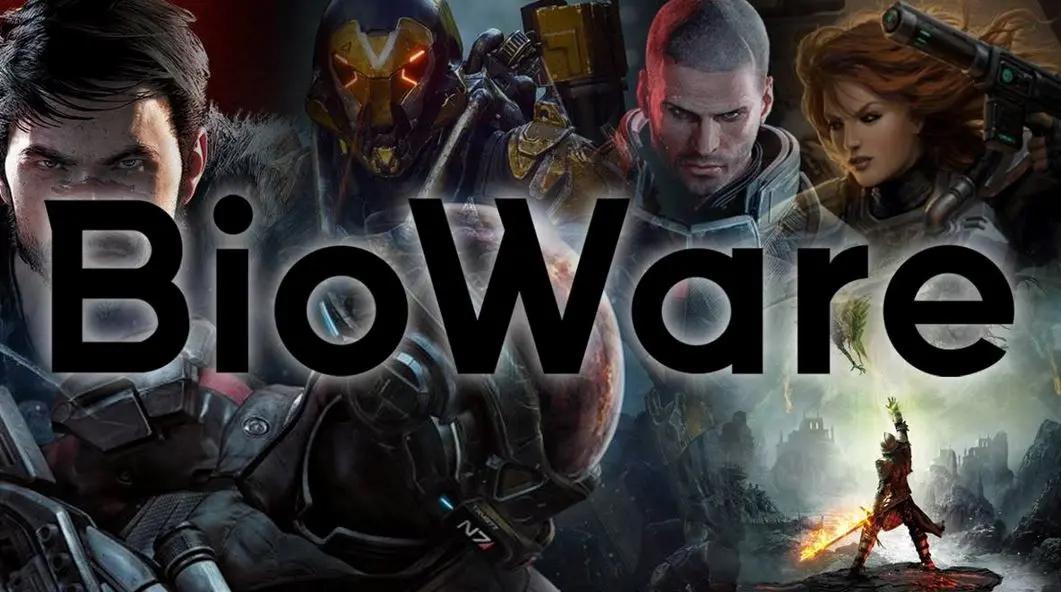
Thus, ultimately, BioWare’s closure and the cancellation of the next Mass Effect represent the sad end of a fundamental pillar of video games, in a context marked by The Veilguard’s commercial stumble, creative tensions, and corporate changes at Electronic Arts, which culminated in a three-decade legacy.
